
Amazing Women from Islamic History
Amazing Women from Islamic History
For hundreds of years girls left their mark on their societies, converting the route of history at times, and influencing tremendous spheres of lifestyles at others. In Muslim Civilisation, wonderful women from exclusive faiths and backgrounds labored alongside men to increase their communities. Their inspiring stories, charismatic personalities and determination to make contributions to the development of their surroundings cause them to beacons that guide young males and females today.
Women on the time participated in all fields of life. There were girls who championed educational and cultural efforts like Fatima al-Fihri, others who excelled in mathematics such as Sutayta al-Mahamili, the clinical field, administration and management, philosophy and the arts. Others played key political roles and ruled critical territories in the Muslim Civilisation, a number of those covered Labana of Cordoba of 10th century (Spain), Sitt al-Mulk of 11th century (Egypt), Melike Mama Hatun of twelfth century (Turkey), Razia (or Raziyya) Sultana of Delhi of thirteenth century (India) and many more...
In birthday party of International Women’s Day we pay tribute to some of these amazing women and highlight their contributions, hoping that new research into unedited manuscripts archived around the sector might shed mild on more girls achievers from that period.
Let us meet a number of those fantastic girls

Fatima al-Fihri
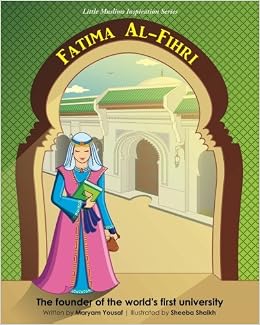
Fatima al-Fihri played a excellent role inside the civilisation and way of life in her community. She migrated along with her father Mohamed al-Fihri from Qayrawan in Tunisia to Fez. She grew up together with her sister in an educated circle of relatives and learnt Fiqh (Islamic jurisprudence) and Hadith. Fatima inherited a considerable amount of cash from her father which she used to construct a mosque for her community. Established within the year 859, the Qarawiyin mosque had the oldest, and probably the primary university in the world. Students travelled there from everywhere in the international to look at Islamic studies, astronomy, languages, and sciences. Arabic numbers have become known and used in Europe thru this university. This is just one essential instance of the position of girls within the development of schooling and civilisation.

Qayrawan
AL-IJLIYA AL-ASTRULABI

For hundreds of years girls left their mark on their societies, converting the route of history at times, and influencing tremendous spheres of lifestyles at others. In Muslim Civilisation, wonderful women from exclusive faiths and backgrounds labored alongside men to increase their communities. Their inspiring stories, charismatic personalities and determination to make contributions to the development of their surroundings cause them to beacons that guide young males and females today.
Women on the time participated in all fields of life. There were girls who championed educational and cultural efforts like Fatima al-Fihri, others who excelled in mathematics such as Sutayta al-Mahamili, the clinical field, administration and management, philosophy and the arts. Others played key political roles and ruled critical territories in the Muslim Civilisation, a number of those covered Labana of Cordoba of 10th century (Spain), Sitt al-Mulk of 11th century (Egypt), Melike Mama Hatun of twelfth century (Turkey), Razia (or Raziyya) Sultana of Delhi of thirteenth century (India) and many more...
In birthday party of International Women’s Day we pay tribute to some of these amazing women and highlight their contributions, hoping that new research into unedited manuscripts archived around the sector might shed mild on more girls achievers from that period.
Let us meet a number of those fantastic girls
Fatima al-Fihri
Fatima al-Fihri played a excellent role inside the civilisation and way of life in her community. She migrated along with her father Mohamed al-Fihri from Qayrawan in Tunisia to Fez. She grew up together with her sister in an educated circle of relatives and learnt Fiqh (Islamic jurisprudence) and Hadith. Fatima inherited a considerable amount of cash from her father which she used to construct a mosque for her community. Established within the year 859, the Qarawiyin mosque had the oldest, and probably the primary university in the world. Students travelled there from everywhere in the international to look at Islamic studies, astronomy, languages, and sciences. Arabic numbers have become known and used in Europe thru this university. This is just one essential instance of the position of girls within the development of schooling and civilisation.
Qayrawan
AL-IJLIYA AL-ASTRULABI
The making of astrolabes, a branch of applied science of extraordinary status, was practiced by using many encompass one woman from Aleppo (Syria), Mariam* “Al-Astrolabiya” Al-Ijliya (Al-'Ijliyah bint al-'Ijli al-Asturlabi), who followed her father's profession and turned into employed at the courtroom of Sayf al-Dawlah (333 H/944 CE-357/967), one among the powerful Hamdanid rulers in northern Syria who guarded the frontier with the Byzantine empire in the 10th century CE.
SUTAYTA AL-MAHMALI
Sutayta become taught and guided by numerous scholars such as her father. She died within the 12 months 377H/987CE. Sutayta did no longer specialise in just one subject however excelled in lots of fields together with Arabic literature, hadith, and jurisprudence in addition to arithmetic. It is stated that she was an expert in hisab (arithmetics) and fara'idh (successoral calculations), each being realistic branches of mathematics which have been well advanced in her time. It is stated additionally that she invented solutions to equations that have been mentioned through different mathematicians, which denote flair in algebra. Although those equations were few, they validated that her capabilities in arithmetic went beyond a easy flair to carry out calculations.
ZAYNAB AL SHAHDA
Zaynab turned into a famous lady calligrapher renowned for her work in fiqh (Islamic law) and hadiths, in addition to her husn-I khatt. She changed into distinctly praised and positioned, and turned into appointed as trainer of Yaqut, the final Abbasid Caliph. She changed into additionally the calligrapher inside the Musa Palace. She became a brilliant, properly-mounted teacher and plenty of human beings had the opportunity to observe with her and to receive their ijaza from her. The repute of Zaynab become well mounted when she turned into named Siqat al-Dawla because of her affiliation with al-Muktafibillah, the Abbasid Caliph. She spent her time reading technology and literature.

GEVHER NESIBE SULTAN
Gevher Nesibe Sultan "became an early thirteenth century princess of the Sultanate of Rum, the daughter of Kilij Arslan II and sister of Kaykhusraw I, and the namesake of a magnificent complex comprising a health facility, an adjoining medrese devoted in most cases to scientific studies, and a mosque in Kayseri, Turkey. The complex (külliye in Turkish) that she endowed, is considered one of the preeminent monuments of Seljuk architecture. The hospital become built among 1204 and 1206, and the medrese, whose construction began immediately after Gevher Nesibe's dying in 1206, was finished in 1210. The complicated takes its call from the princess. The medrese within is known under lots of names: the Gevher Nesibe Medrese; the Çifte Medrese (Twin Medrese); or because the Gıyasiye Medrese, after Ghiyath al-Din Kaykhusraw I, who became accountable for its construction. The tomb inside the medrese is said to belong to Gevher Nesibe
QUEEN AMINA OF ZARIA
During Muslim civilisation, numerous women excelled in numerous fields in Subsaharan Africa. Among them turned into Queen Amina of Zaria (1588-1589). She become the eldest daughter of Bakwa Turunku, who based the Zazzau Kingdom in 1536. Amina came to energy among 1588 and 1589. Amina is generally remembered for her fierce military exploits. Of special pleasant is her awesome military method and specifically engineering skills in erecting wonderful walled camps at some point of her diverse campaigns. She is generally credited with the building of the famous Zaria wall.
LADY MARY WORTLEY MONTAGU
Maybe she isn't at once from Muslim Civilisation however the English aristocrat and author Lady Mary Wortley Montagu (1689-1762) is these days remembered especially for her letters from Turkey, an early example of an earthly work by way of a Western woman approximately the Muslim Orient. When Lady Mary was inside the Ottoman Empire, she located the local practice of variolation, the inoculation against smallpox. Unlike Jenner's later vaccination, which used cowpox, variolation used a small measure of smallpox itself. Lady Mary, who had suffered from the disease, advocated her own youngsters to be inoculated whilst in Turkey. On her return to London, she enthusiastically promoted the procedure, however encountered a exceptional deal of resistance. However, her example virtually popularized the exercise of inoculation with smallpox in British high society. The numbers inoculated remained small, and clinical effort during the 18th century become concentrated on decreasing the risks and side-results of the inoculation process.


No comments: